

🥖Tritordeum Sourdough Bread with Scalded Flour and Malted Grain
Recipe by Maioris Baker
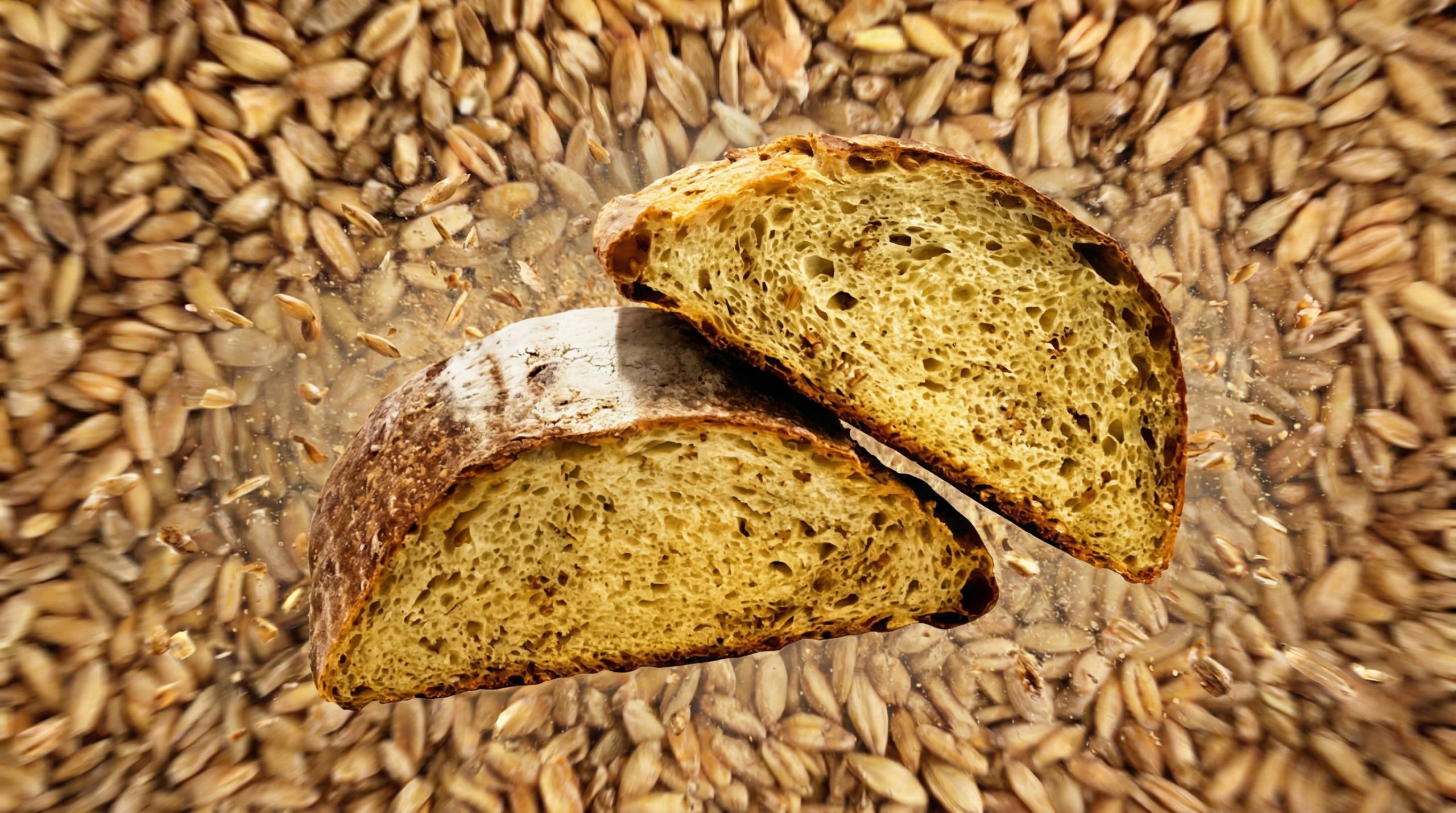
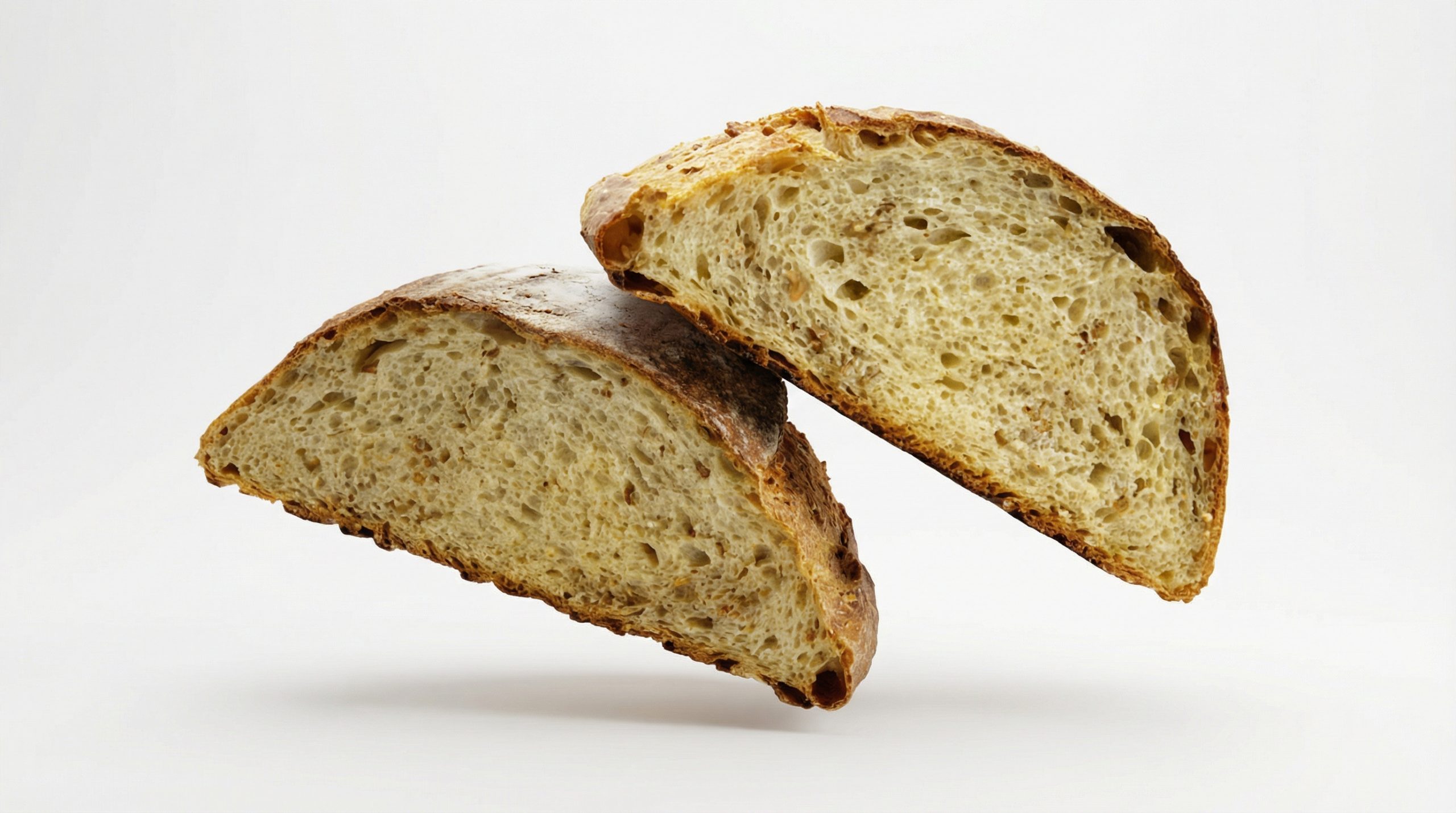
This formula combines Tritordeum flour, active Tritordeum sourdough, a hot flour scald, and rehydrated malted grain. The result is a loaf with enhanced moisture retention, mild sweetness from enzymatic activity, and improved crumb softness due to starch gelatinisation in the scald.


PREP.
30-40 min
BAKE
40-45 min
TOTAL
up to 18 hours
(with chill time)
Blank
Ingredients
Base Dough
- 400 g Tritordeum flour
- 150 g active Tritordeum sourdough starter (100% hydration)
- 225 g flour scald (prepared in advance, see below)
- 2.5 g Tritordeum malt flour
- 100 g rehydrated Tritordeum malted grain
- 175 g water (for the dough only; not including scald or soaking water)
- 11 g salt
- 6 g fresh yeast (optional, for added fermentation reliability)
Flour Scald (prepare in advance)
- 75 g Tritordeum flour
- 150 g water at 90–100 °C
Malted Grain Soaker
Cold water for soaking (12 hours)
100 g Tritordeum malted grain

Nutrition
Energy (Kcal): 223.6
Carbohydrates (%): 48,4
Sugar (%): 1,27
Fats (%): 1,16
Proteins (%): 6,68
Fibers (%): 2,64
Instructions

Prepare the Malted Grain (12 hours before mixing). Soak the Tritordeum malted grain in cold water for 12 hours. Drain thoroughly before incorporating into the dough.
This step softens the grain, improves digestibility, and prevents it from drawing water from the dough during fermentation.

Prepare the Flour Scald. Pour 150 g of water at 90–100 °C over 75 g of Tritordeum flour.
Mix thoroughly until smooth and homogeneous. Cover and allow to cool completely before use.
The scald promotes starch gelatinisation, increasing water retention, crumb softness, and natural sweetness.

Mixing. In a mixing bowl, combine:
- Tritordeum flour
- Active sourdough starter
- Flour scald
- Malt flour
- Water
Mix until the dough begins to form.
Add the salt (and fresh yeast if using) and continue mixing until medium gluten development is achieved.
Finally, gently incorporate the drained malted grains to distribute evenly.

Bulk Fermentation Ferment for 2–3 hours at 24–26 °C, performing 2–3 stretch-and-folds during the first 90 minutes. The dough should show visible expansion and improved structure.

Shaping and Final Proof: Pre-shape, rest 20 minutes, then shape into a round loaf.
Place seam-side up in a floured banneton. Proof:
- 2–3 hours at room temperature, or
- 12–16 hours at 4 °C for cold fermentation.

Baking
Preheat the oven to 240 °C with a baking stone or Dutch oven.
Score the loaf and bake:
- 20 minutes at 240 °C with steam (or lid on),
- then reduce to 210 °C and bake for 20–25 minutes more, until deep golden and fully baked (core temperature approx. 96–98 °C).
Cool completely before slicing.
Technical Notes
- The scald contributes to improved crumb elasticity and shelf life through starch gelatinisation.
- Malt flour enhances enzymatic activity, supporting fermentation and crust coloration.
- Rehydrated malted grain provides texture, aromatic complexity, and mild sweetness.
- Optional yeast ensures fermentation stability in cooler environments or when working with less active sourdough.
Submit your review | |