

Do You Know the Differences Between Tritordeum and Khorasan Wheat?
With so many types of wheat available, it’s easy to get confused. That’s why we’ve put together this comparison to help you understand the main differences between Tritordeum and Khorasan wheat. While they share some similarities, they are also very distinct in many aspects. Let’s dive in!
🌱 Origins
Tritordeum is a modern cereal species. It was first created in 1977 in Spain by crossing durum wheat (Triticum durum) with a wild barley (Hordeum chilense) native to Chile and Argentina. Today, Tritordeum is cultivated in Europe (mainly Spain, Italy, and Greece) as well as in Australia.
Khorasan wheat, on the other hand, is an ancient subspecies of durum wheat. Also known as the “Pharaoh’s wheat” or “Tutankhamun’s wheat,” it has been cultivated for more than 5,000 years, with origins traced back to ancient Egypt. Nowadays, most Khorasan wheat is produced in Canada and the United States.
🌾 Grain Morphology, Cultivation, and Baking Uses
Grain morphology: Tritordeum grains are small and similar in size to durum wheat, while Khorasan grains are much larger, elongated, and vitreous.
Cultivation: Tritordeum is grown in both conventional and organic systems. Khorasan wheat, however, is almost exclusively cultivated under certified organic production.
Baking and cooking: Tritordeum performs much like common wheat in baking, making it ideal for bread and other leavened products. Khorasan, in contrast, behaves more like durum wheat, which makes it particularly suitable for pasta making.
🥗 Nutritional and Agronomic Similarities
Despite their differences, both cereals are highly regarded for their nutritional qualities:
Neither Tritordeum nor Khorasan has been genetically modified.
Both lack the D-genome present in common wheat, a factor associated with easier digestibility.
They support sustainable and organic farming, contributing to crop diversity and healthier diets.
When refined into white flour, both show very similar nutritional profiles in terms of protein, carbohydrates, fiber, and sugar content.
💰 Market Position and Pricing
Tritordeum is positioned similarly to modern spelt: a mid- to high-range cereal. It is available in both conventional and organic markets, typically priced at 3 to 4 times the cost of modern wheat.
Khorasan wheat is positioned much higher in the market. Due to its low yields and export costs, it is usually twice as expensive as Tritordeum—making it 6 to 8 times the price of modern wheat. It is sold only in the organic market and remains very much a niche cereal.
Another difference: Khorasan prices fluctuate throughout the year due to inconsistent supply, whereas Tritordeum offers stable pricing and reliable availability.
🍞 Bread Comparison
Image: Khorasan wheat crumb (left) vs. Tritordeum crumb (right)
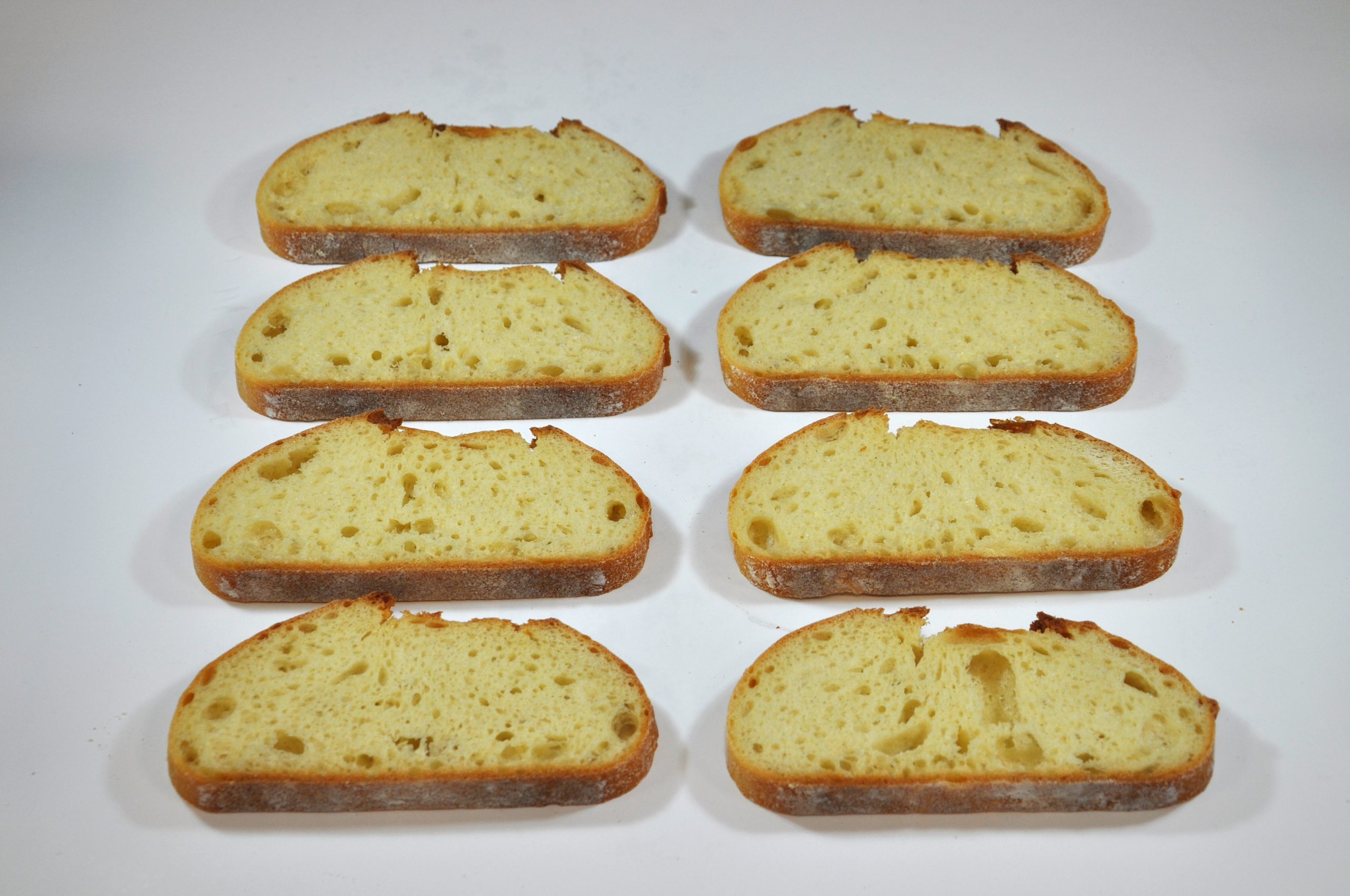

As you can see, while Tritordeum and Khorasan wheat share certain characteristics, they also differ significantly in aspects such as their origin, grain morphology, and market price. We hope this comparison has helped clarify your doubts and given you a clearer picture of both cereals.