

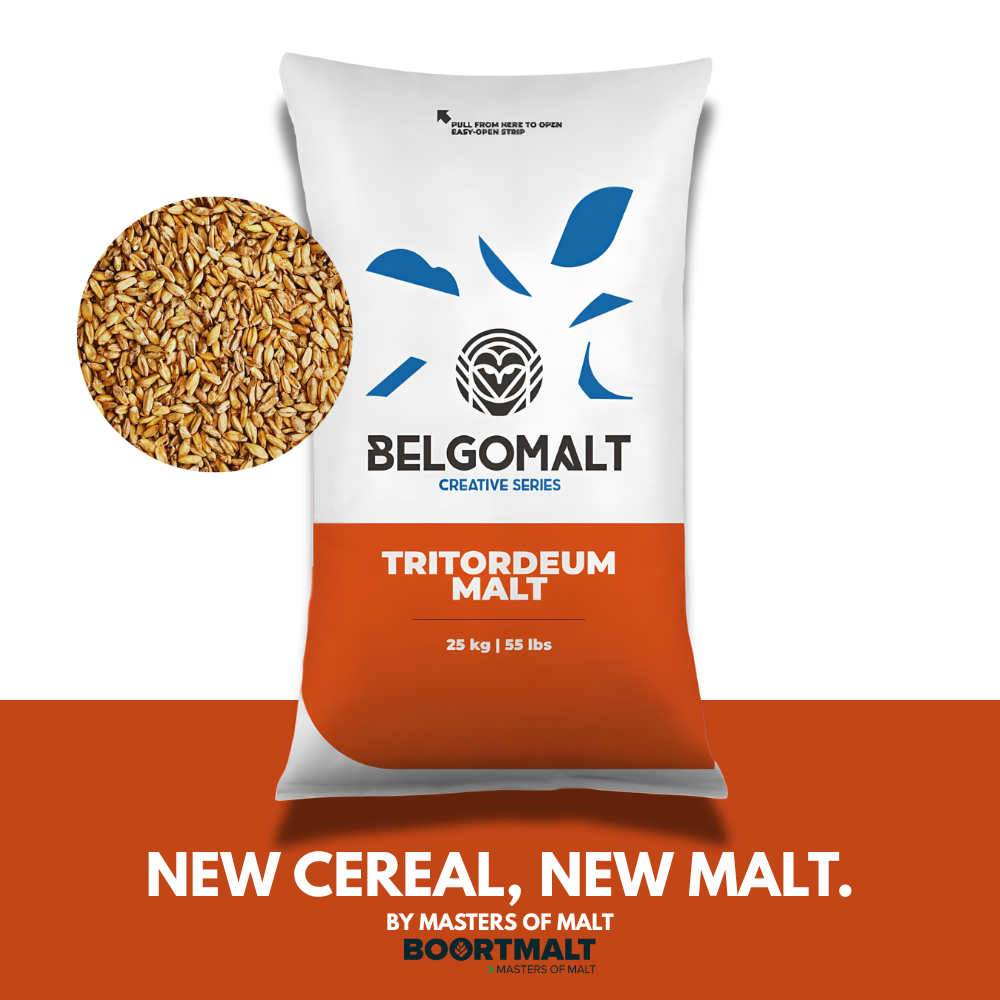
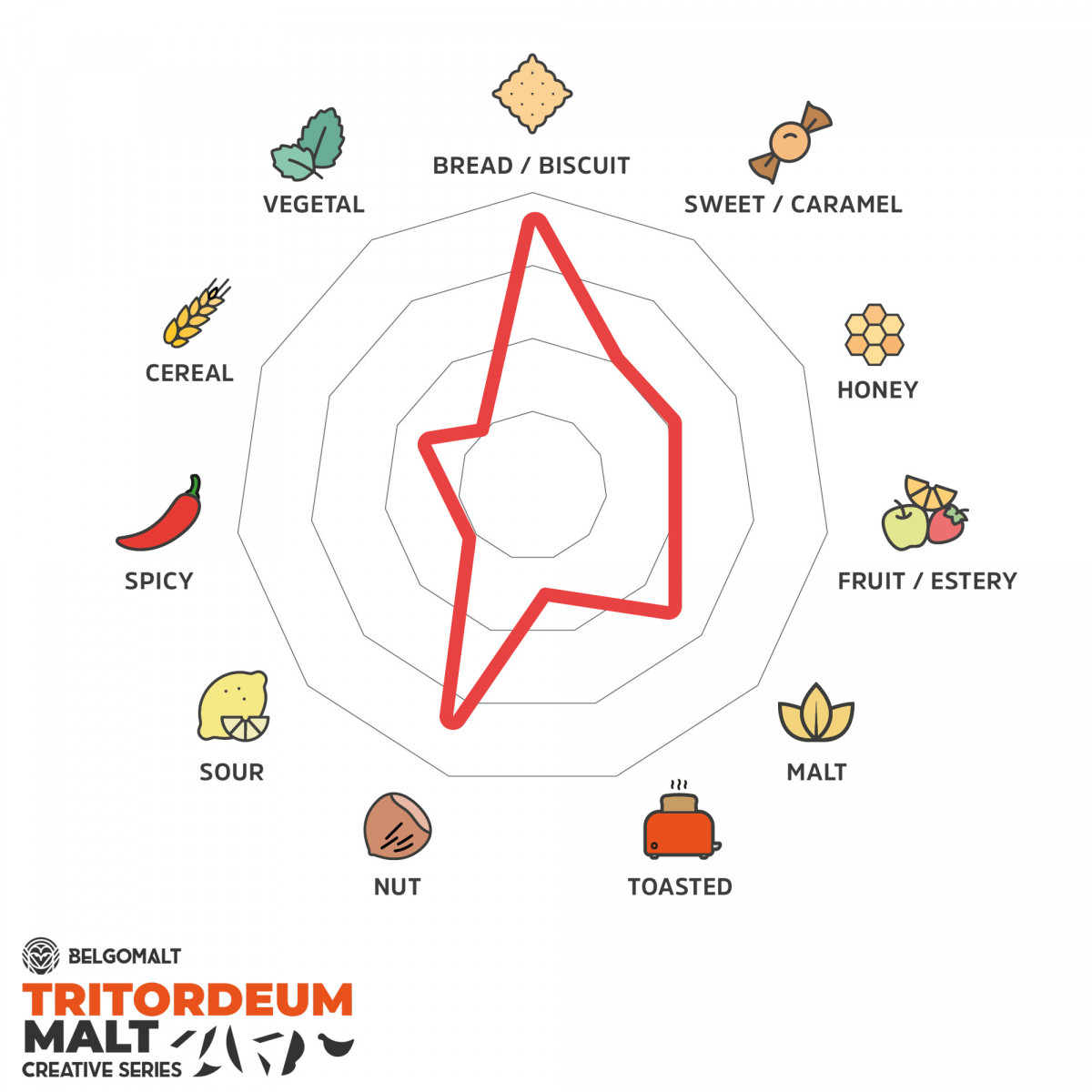
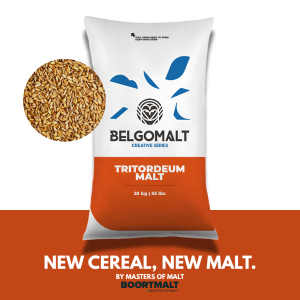
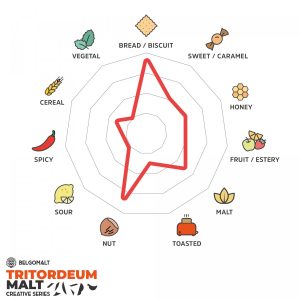
Belgomalt Creative Series Tritordeum malt has excellent brewing properties. Tritordeum malt contributes a very unique sensory profile to malt-based beverages. The light maltiness of Tritordeum malt coupled with dry, nutty-character is a wonderful addition to most beer styles, particularly malt-forward ales, such as pale ales, IPAs, barley wines, stouts, porters, saisons and Belgian beer styles.
Tritordeum is a unique hull-less grain – a cross between wild barley and durum wheat – which inherits beneficial agronomic traits from its parental species, such as disease resistance (rust, Septoria), abiotic stress resistance (drought, heat, salinity) and nitrogen use efficiency.
Brewers recommendation
- As Tritordeum malt lacks a husk, grist inclusion rate should be likened to that of wheat malt ( max 50%).
- The diastatic power (DP) (alpha- and beta-amylase) of Tritordeum malt is much higher than that of barley malt. If mashing with an extensive, stepped mash-profile (with gelatinisation considered), attenuation should be high. This will likely result in a dry beer profile. High DP levels also make Tritordeum malt highly suitable to adjunct additions.
- Due to high levels of lutein, Tritordeum malt contributes a subtle orange / copper pigment to wort. Tritordeum malt also contains higher levels of ferulic acid than barley malt.
- Tritordeum malt has also been shown to lead to a robust and persistent fine foam.