

The Digestibility of Tritordeum: Scientific Mechanisms and Clinical Evidence Behind a Next-Generation Cereal
Tritordeum, the hybrid cereal obtained from Hordeum chilense (wild barley) and Triticum durum (durum wheat), has emerged as a promising raw material for consumers seeking cereals with improved digestibility, reduced immunogenic gluten peptides, and better gastrointestinal tolerance. Unlike gluten-free grains, Tritordeum retains gluten—and thus is not suitable for people with celiac disease—but its distinct gluten composition, protein architecture, and fermentative profile yield measurable physiological differences.
A growing body of peer-reviewed literature demonstrates that Tritordeum behaves differently from bread wheat during digestion, immunological recognition, and intestinal transit, producing clinical benefits particularly for individuals with non-celiac wheat sensitivity (NCWS) and irritable bowel syndrome (IBS-D).
This article synthesizes the current scientific evidence, while clarifying the biological mechanisms underlying Tritordeum’s digestibility advantages.
ARTICLE TYPE:
This article provides a concise, evidence-based overview of why Tritordeum is more digestible than conventional wheat, combining biochemical data with clinical studies on gastrointestinal tolerance. It offers professionals a clear understanding of Tritordeum’s reduced immunogenicity, improved protein digestibility, and documented benefits for sensitive consumers.
- BLOG -
Check our Latest Posts


EXECUTIVE SUMMARY:
Tritordeum, a hybrid cereal derived from durum wheat and Hordeum chilense, demonstrates a distinct biochemical and physiological profile that results in superior digestive tolerance compared to conventional wheat. Its gluten structure contains significantly fewer immunogenic epitopes, lower levels of amylase–trypsin inhibitors, and a reduced FODMAP load, all of which contribute to improved protein digestibility and reduced gastrointestinal stress. Clinical studies consistently show that Tritordeum bread is well accepted, induces fewer gastrointestinal symptoms, and maintains the stability of the gut microbiota in healthy individuals, while proteomic analyses reveal enhanced enzymatic breakdown and substantially lower immunotoxic potential.
Across multiple controlled trials in non-celiac wheat sensitivity (NCWS) and irritable bowel syndrome–diarrhea variant (IBS-D), Tritordeum-based diets significantly improve symptoms, reduce intestinal permeability and inflammation, modulate fermentative activity, and contribute to better psychological well-being. These effects position Tritordeum as a scientifically validated alternative for individuals aiming to reduce—but not eliminate—gluten intake while maintaining nutritional value and sensory quality. Although not suitable for celiac disease or wheat allergy, Tritordeum offers a unique middle ground between wheat and gluten-free diets, combining digestive comfort, clinical benefits, and culinary versatility.
READING TIME:
15 min
CONNECT WITH US:
ARTICLE:
Read Mode Prevent your screen from going dark as you read.
1. Why Tritordeum Is Different: The Biochemical Basis of Improved Digestibility
1.1. Unique Gluten Composition and Lower Immunogenic Epitopes
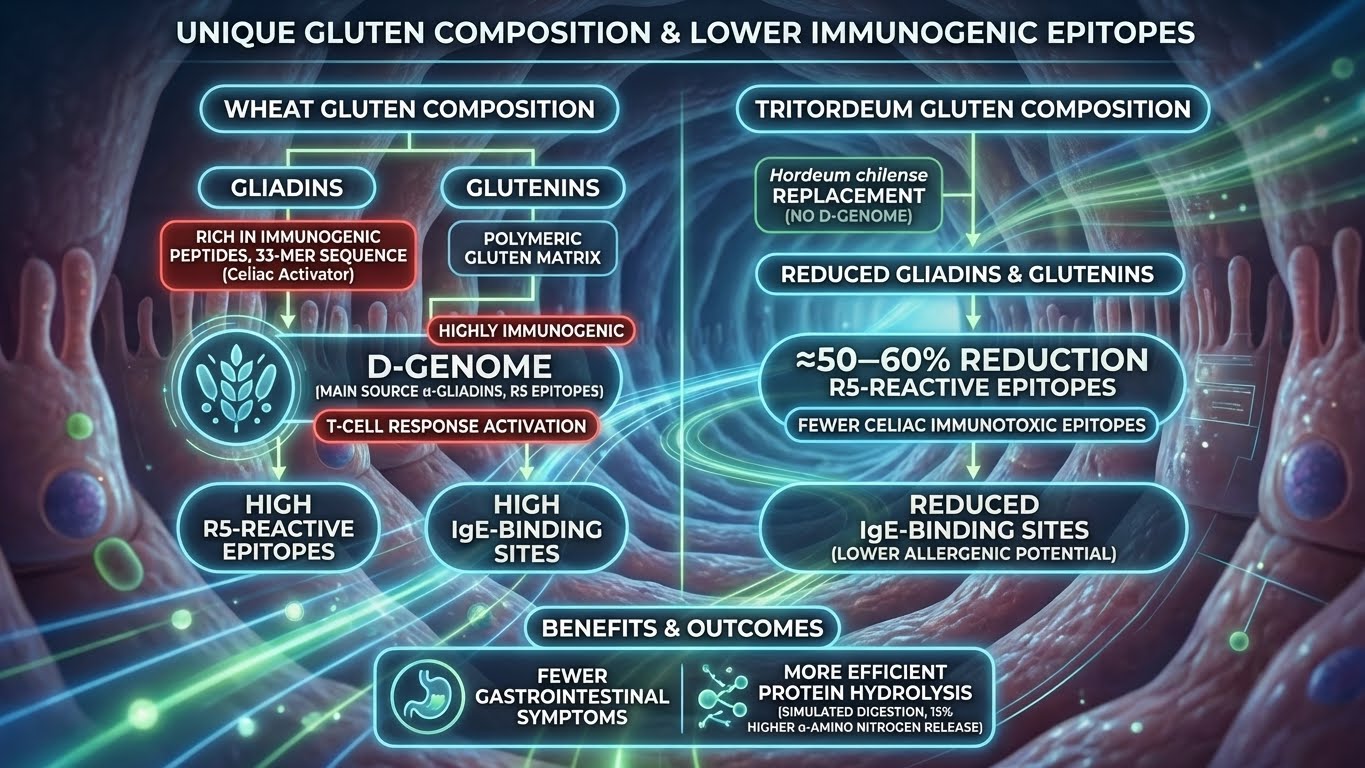
Wheat gluten comprises two major protein classes:
Gliadins, rich in immunogenic peptides, including the 33-mer sequence responsible for activating T-cell responses in celiac disease.
Glutenins, which form the polymeric gluten matrix.
Tritordeum’s genome replaces wheat’s D-genome (the main source of highly immunogenic α-gliadins and R5-reactive epitopes) with chromosomes from Hordeum chilense. This results in:
A significant reduction (≈50–60%) in R5-reactive epitopes compared to bread wheat [4].
Fewer peptides matching known celiac disease immunotoxic epitopes [6].
Reduced IgE-binding sites, suggesting a lower allergenic potential [6].
These structural differences explain why Tritordeum typically induces fewer gastrointestinal symptoms in sensitive individuals and why simulated digestion yields 15% higher α-amino nitrogen release, indicating more efficient protein hydrolysis [4].
| “Tritordeum stands apart from wheat by offering a naturally gentler gluten profile—bringing digestive comfort without sacrificing the pleasure of real bread and pasta.”
2. Digestibility & Gastrointestinal Response: What the Studies Show
Below, we integrate the key findings while explaining why they occur mechanistically.
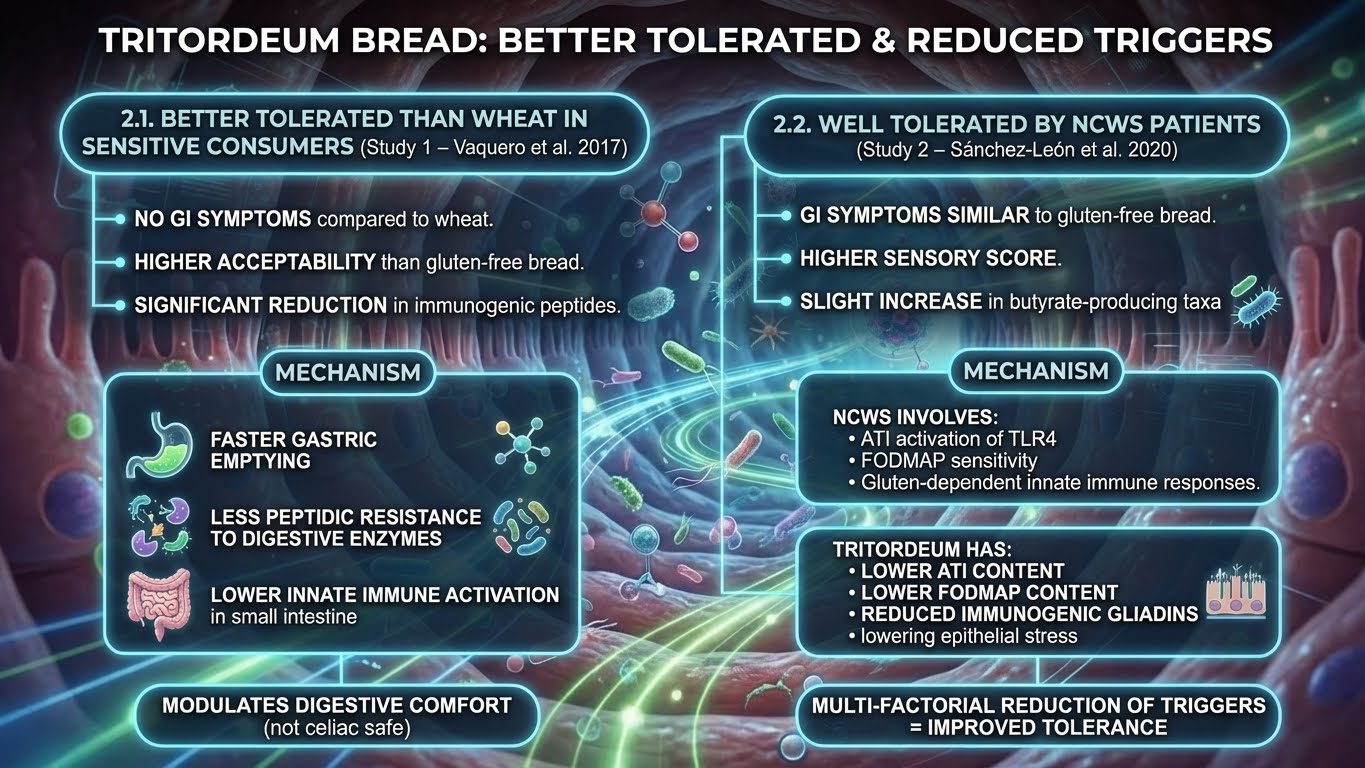
2.1. Tritordeum Bread Is Better Tolerated Than Wheat Bread in Sensitive Consumers
Study 1 – Vaquero et al. 2017 [1]
In healthy adults, Tritordeum bread showed:
No gastrointestinal symptoms compared to wheat bread.
Higher acceptability than gluten-free bread.
A significant reduction in immunogenic peptides.
Mechanism
The reduced α-gliadin content and milder gluten network produce:
Faster gastric emptying,
Less peptidic resistance to digestive enzymes, and
Lower innate immune activation in the small intestine.
This is not enough to make Tritordeum safe for celiac disease, but it does modulate digestive comfort in the general population.
2.2. Tritordeum Is Well Tolerated by Non-Celiac Wheat Sensitivity (NCWS) Patients
Study 2 – Sánchez-León et al. 2020 [2]
In NCWS patients:
GI symptoms were similar between gluten-free and Tritordeum bread.
Tritordeum bread was rated higher in sensory score.
No major shifts occurred in gut microbiota composition, except a slight increase in butyrate-producing taxa.
Mechanism
NCWS is a heterogeneous condition involving:
Amylase–trypsin inhibitor (ATI) activation of TLR4,
FODMAP sensitivity,
Gluten-dependent innate immune responses.
Tritordeum contains:
Lower ATI content, reducing innate immune activation.
Lower FODMAP content than bread wheat, decreasing luminal fermentation.
Reduced immunogenic gliadins, lowering epithelial stress.
This multi-factorial reduction of triggers likely explains the improved tolerance.
| “Thanks to its unique genome, Tritordeum contains fewer immunogenic peptides and lower ATI levels—providing a fundamentally lighter experience for the gut.”
3. Tritordeum and IBS-D: Effects on the Gut Barrier, Fermentation, and Symptoms
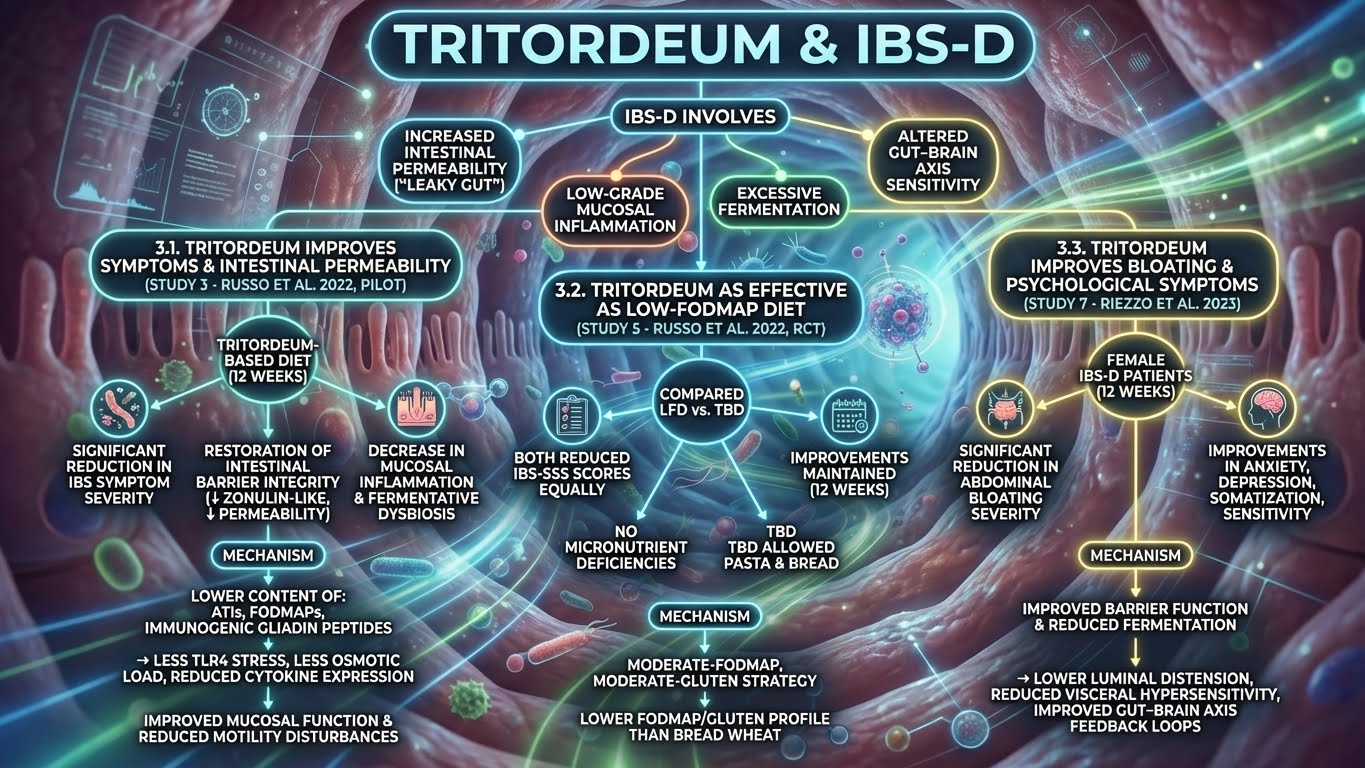
IBS-D involves:
Increased intestinal permeability ("leaky gut"),
Low-grade mucosal inflammation,
Excessive fermentation,
Altered gut–brain axis sensitivity.
Three controlled trials have examined Tritordeum diets in IBS-D patients.
3.1. Tritordeum Improves Symptoms and Intestinal Permeability
Study 3 – Russo et al. 2022 (Pilot) [3]
A 12-week Tritordeum-based diet led to:
Significant reduction in IBS symptom severity.
Restoration of intestinal barrier integrity (↓ zonulin-like proteins, ↓ intestinal permeability).
Decrease in markers of mucosal inflammation and fermentative dysbiosis.
Mechanism
Tritordeum’s lower content of:
ATIs → less TLR4-driven epithelial stress.
FODMAPs → less osmotic load and fermentation.
Immunogenic gliadin peptides → reduced epithelial cytokine expression.
Together, these lead to improved mucosal function and reduced motility disturbances.
3.2. Tritordeum as Effective as a Low-FODMAP Diet for IBS-D
Study 5 – Russo et al. 2022 (RCT) [5]
Compared a low-FODMAPs diet (LFD) vs. Tritordeum-based diet (TBD):
Both diets reduced IBS-SSS scores equally.
Improvements were maintained for 12 weeks.
No micronutrient deficiencies occurred.
The TBD allowed pasta and bread consumption—highly relevant culturally.
Mechanism
Tritordeum does not eliminate FODMAPs entirely, but its FODMAP profile is substantially lower than bread wheat, and its gluten profile generates less luminal distress.
Thus, Tritordeum acts as a "moderate-FODMAP, moderate-gluten" dietary strategy that avoids the restrictiveness of LFDs.
3.3. Tritordeum Improves Bloating and Psychological Symptoms
Study 7 – Riezzo et al. 2023 [7]
In female IBS-D patients (12 weeks):
Significant reduction in abdominal bloating severity.
Improvements in anxiety, depression, somatization, and sensitivity.
Reduction in abdominal circumference not correlated with bloating intensity → bloating was functional, not mechanical.
Mechanism
Improved barrier function and reduced fermentation lead to:
Lower luminal distension,
Reduced visceral hypersensitivity,
Improved gut–brain axis feedback loops.
Thus, Tritordeum influences not only digestive physiology but also neuroenteric integration.
| “Clinical studies show that Tritordeum delivers the taste and texture of wheat with markedly better digestive tolerance for everyday consumers.”
4. Protein Digestion and Bioaccessibility: Why Tritordeum Performs Better
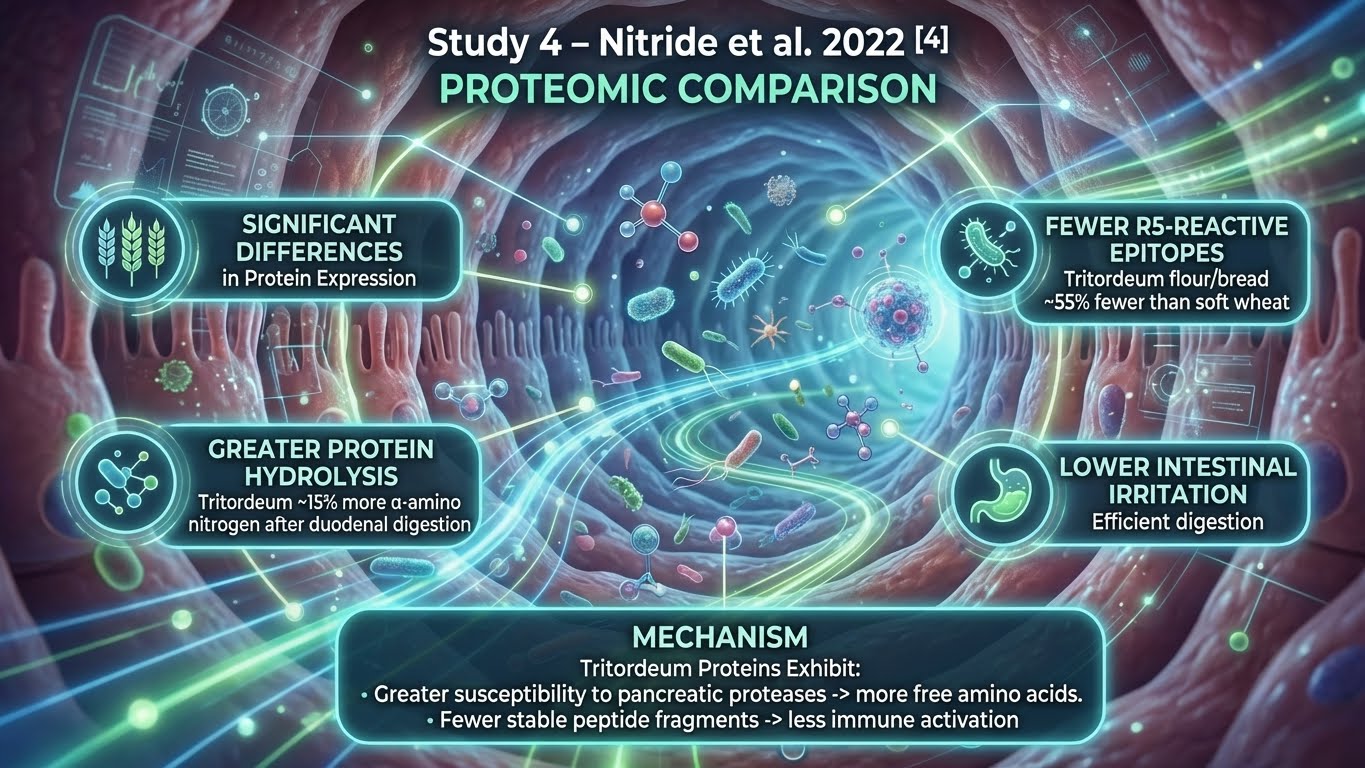
Study 4 – Nitride et al. 2022 [4]
Proteomic comparison revealed:
Significant differences in protein expression between Tritordeum, durum wheat, and soft wheat.
Tritordeum produced ~15% more α-amino nitrogen after duodenal digestion → greater protein hydrolysis.
Tritordeum flour and bread contained ~55% fewer R5-reactive epitopes than soft wheat.
Mechanism
Tritordeum proteins exhibit:
Greater susceptibility to pancreatic proteases, producing more free amino acids.
Fewer stable peptide fragments that resist digestion and trigger immune activation.
This results in more efficient digestion and lower intestinal irritation.
| “For people sensitive to wheat, Tritordeum offers a scientifically supported balance: real-grain quality with significantly fewer digestive triggers.”
5. Gut Microbiota: Stability and Modulation
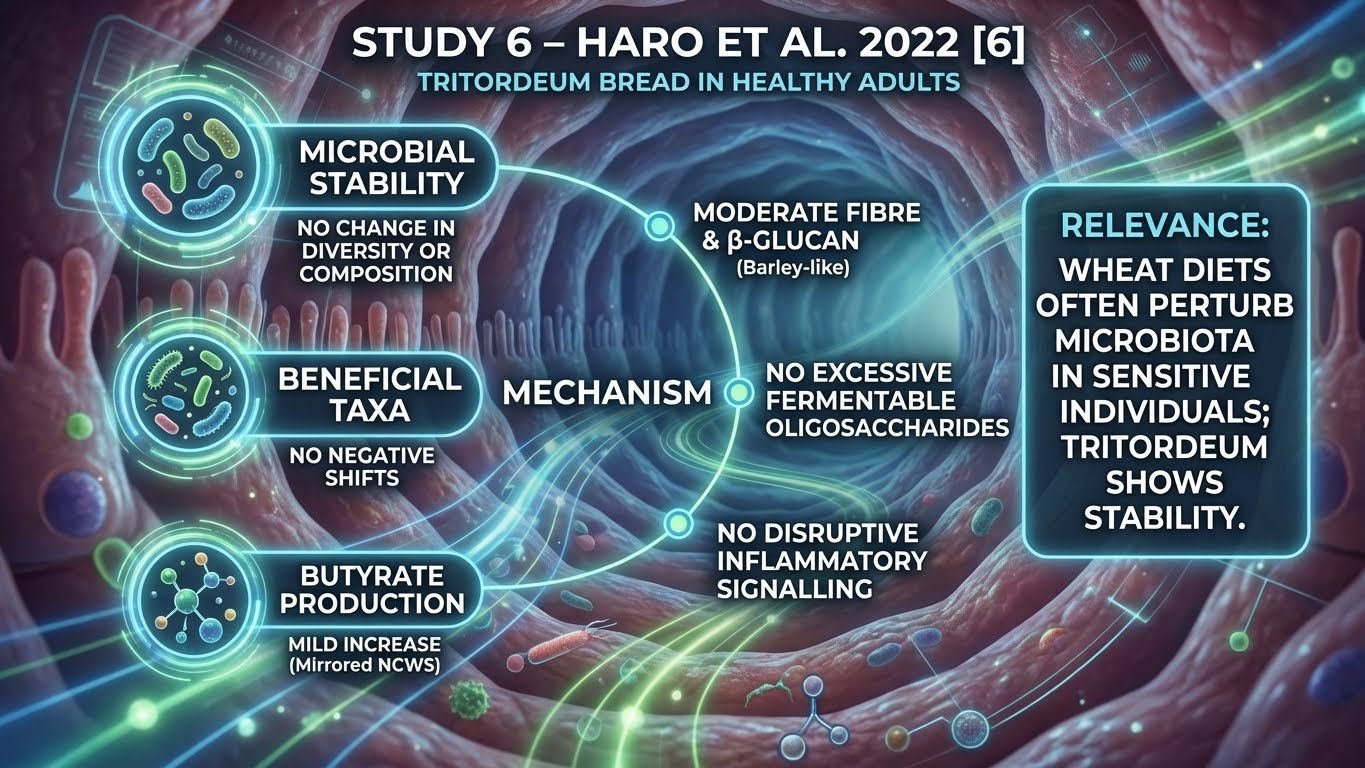
Study 6 – Haro et al. 2022 [6]
In healthy adults:
Tritordeum bread consumption did not alter diversity or overall microbial composition.
No negative shifts in beneficial taxa.
A mild increase in butyrate-producers mirrored NCWS findings.
Mechanism
Stable microbiota reflects:
Moderate fibre and β-glucan content similar to barley,
Absence of excessive fermentable oligosaccharides,
No disruptive inflammatory signalling.
This is relevant because diets containing wheat often perturb the microbiota in sensitive individuals.
| “Tritordeum has demonstrated the ability to improve intestinal permeability and reduce GI distress—an uncommon benefit among traditional cereals.”
6. Synthesis: What Tritordeum Offers for Digestive Health
Across seven clinical and biochemical studies, Tritordeum consistently demonstrates:
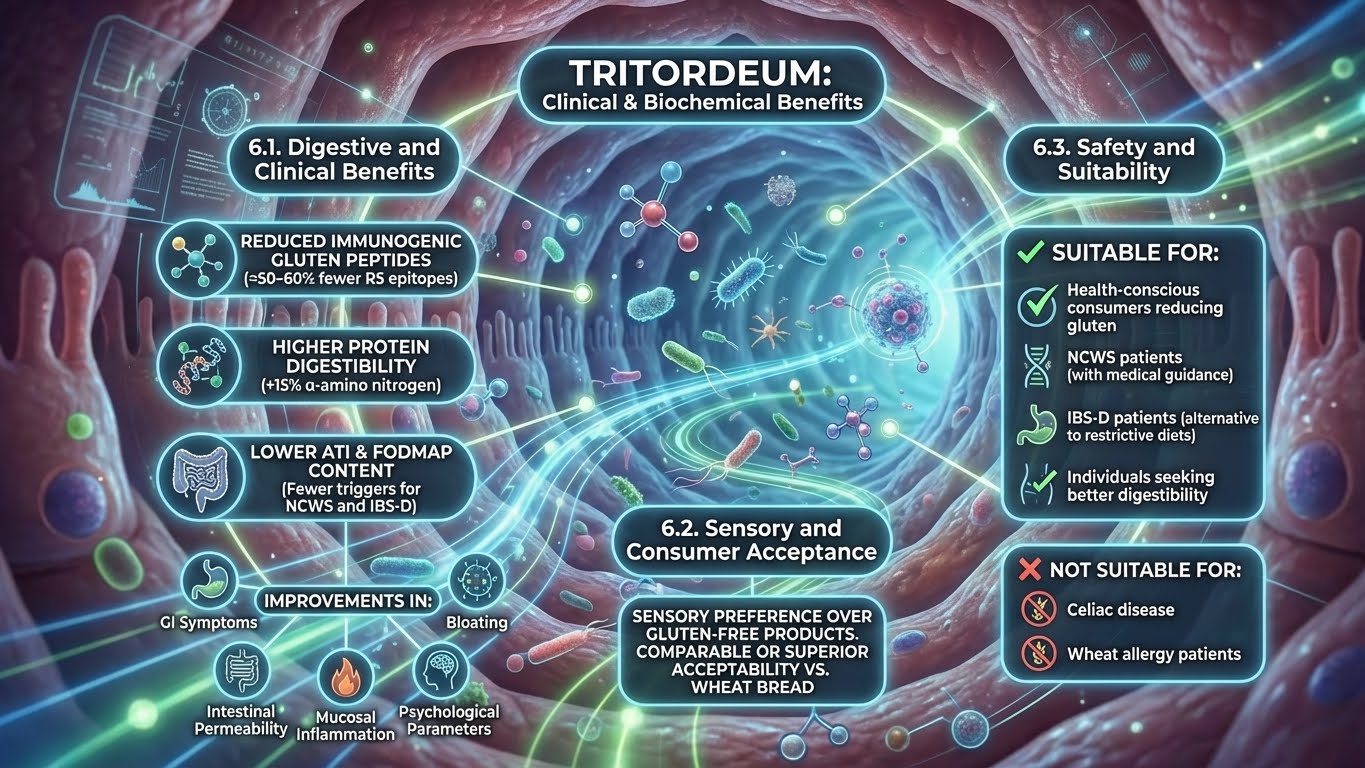
6.1. Digestive and Clinical Benefits
Reduced immunogenic gluten peptides (≈50–60% fewer R5 epitopes).
Higher protein digestibility (+15% α-amino nitrogen).
Lower ATI and FODMAP content → fewer triggers for NCWS and IBS-D.
Improvements in:
GI symptoms,
Bloating,
Intestinal permeability,
Mucosal inflammation,
Psychological parameters.
6.2. Sensory and Consumer Acceptance
Sensory preference over gluten-free products.
Comparable or superior acceptability vs. wheat bread.
6.3. Safety and Suitability
✔ Suitable for:
Health-conscious consumers reducing gluten
NCWS patients (with medical guidance)
IBS-D patients, as an alternative to restrictive diets
Individuals seeking better digestibility
✘ Not suitable for:
Celiac disease
Wheat allergy patients
| “Tritordeum can match the digestive benefits of a low-FODMAP diet while preserving the cultural staples people love—like bread and pasta.”
7. Conclusions
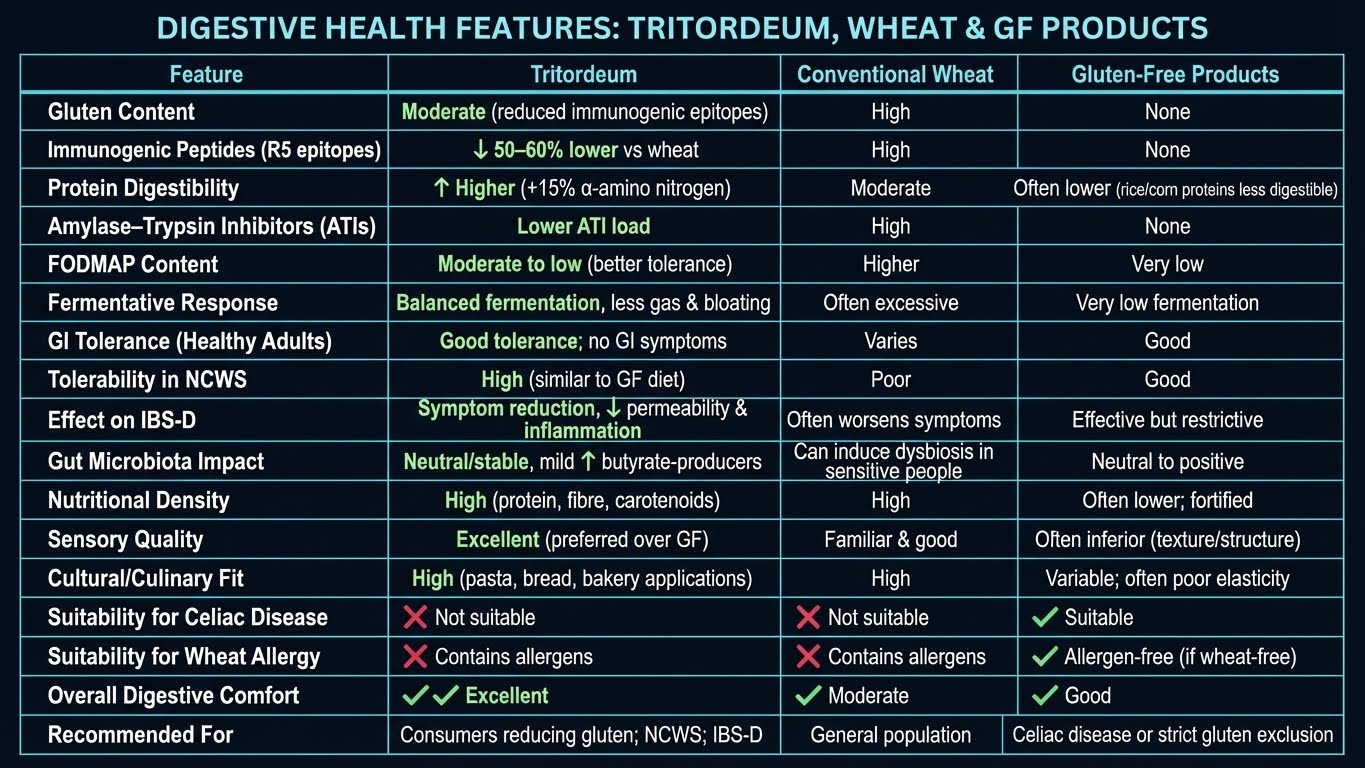
The scientific evidence supports Tritordeum as a nutritionally robust, gastro-intestinally friendly cereal with distinct advantages over conventional wheat. Its reduced immunogenic peptide profile, improved protein digestibility, lower ATI content, and favourable fermentative characteristics collectively contribute to better digestive tolerance.
For individuals seeking to reduce—but not eliminate—gluten while maintaining culinary and nutritional quality, Tritordeum represents a scientifically validated, culturally compatible, and physiologically beneficial option.
Bibliography
[1] Vaquero, L. et al. Tritordeum: a novel cereal for food processing with good acceptability and significant reduction in gluten immunogenic peptides in comparison with wheat. 2017.[2] Sánchez-León, S. et al. Tritordeum breads are well tolerated with preference over gluten-free breads. 2020.
[3] Russo, F. et al. Managing Symptom Profile of IBS-D Patients With Tritordeum-Based Foods. 2022.
[4] Nitride, C. et al. Tritordeum as an Innovative Alternative to Wheat: A Comparative Digestion Study on Bread. 2022.
[5] Russo, F. et al. Comparison of Low-FODMAP Diet and Tritordeum-Based Diet on IBS-D. 2022.
[6] Haro, C. et al. Tritordeum bread reduces immunogenic gluten intake without altering gut microbiota. 2022.
[7] Riezzo, G. et al. A Tritordeum-Based Diet for IBS-D: Effects on Bloating and Psychological Symptoms. 2023.